
Ted Cousins
Member
Most battery-less photographic light-meters loose sensitivity over time as the sensor ages, especially Weston 'Master' Models up to model V.
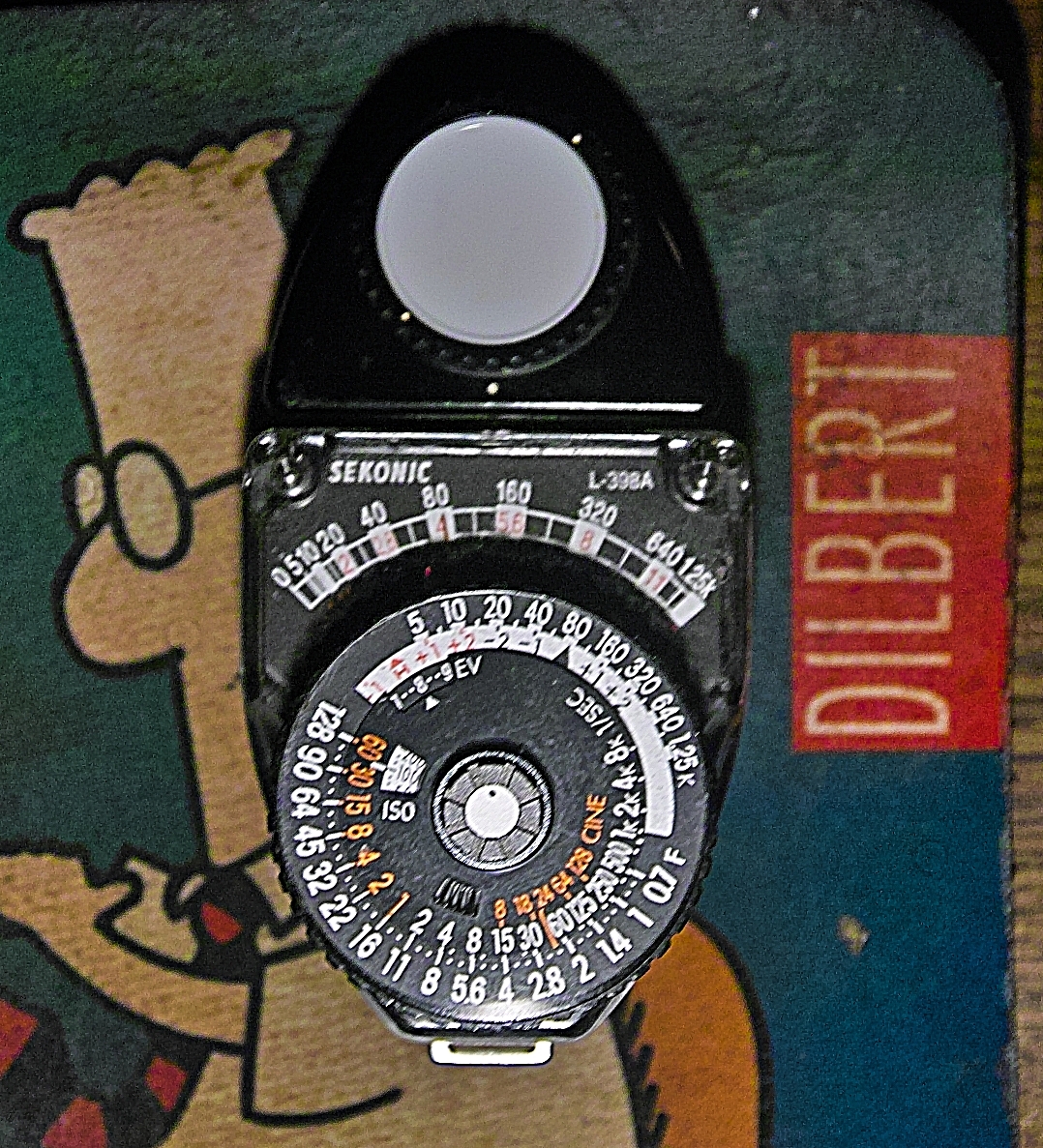
A couple weeks ago, I found a Sekonic Model L-398A cheap on ebay and bought it because it still current and has an amorphous silicon sensor - much less susceptible aging than Selenium.
Pardon the pic quality:
I already owned a 4% accurate commercial light-meter ...
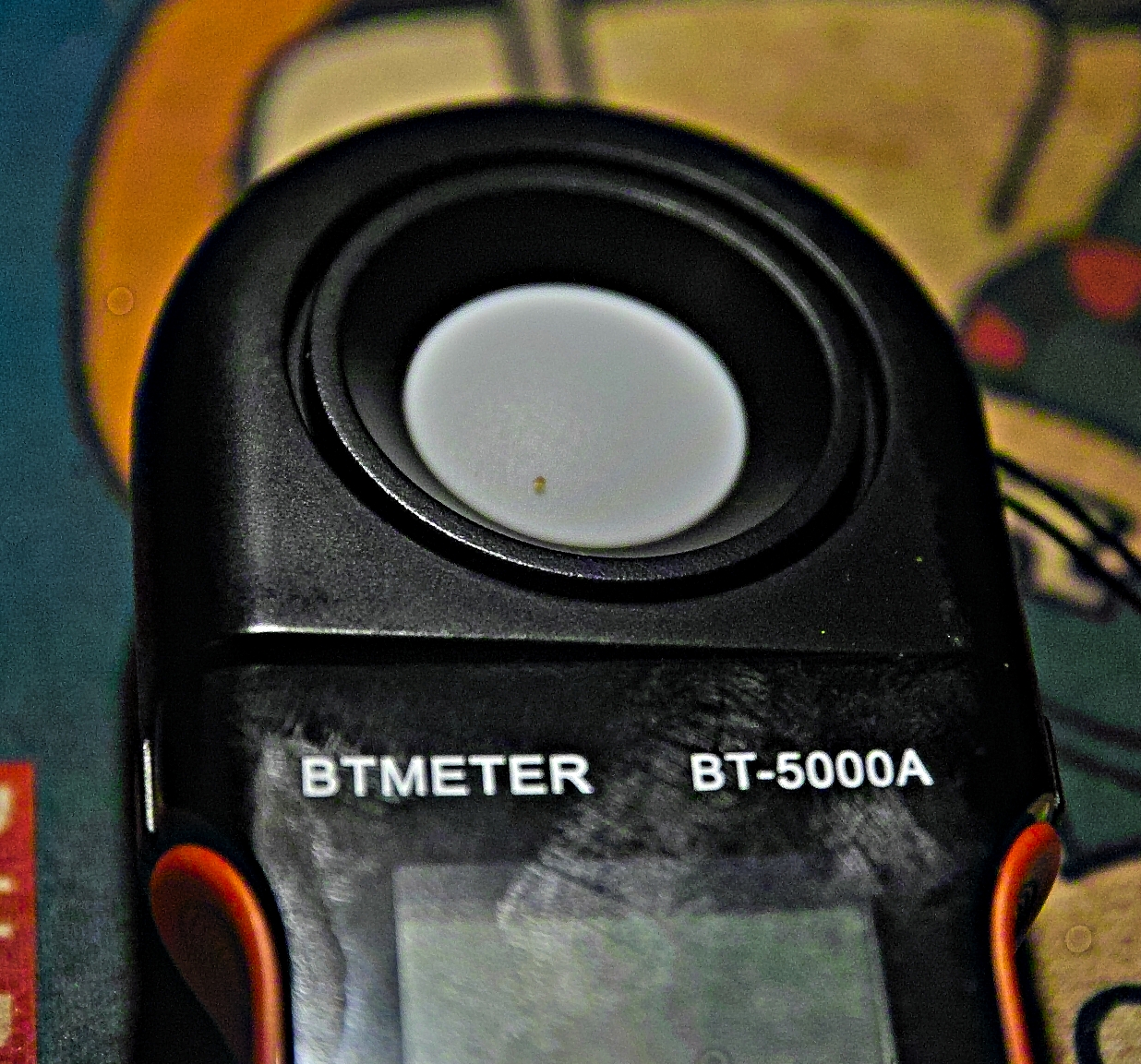
It has a sunken semi-dome filter ... I'm guessing for cosine response ...
About 14" from a cool white office desk lamp, the Sekonic 398A tells me 80 foot-candles (fc), 8Ev. The BTMETER tells me 39 fc.
Assuming that the l-398A hasn't been dropped, is the reading reasonable, I wonder?
Others:
My good-ish Japanese-made Weston Master6 tells me 26 fc. My original Sekonic 398 at 100 ASA with the dome on tells me about 65 fc, might be75 fc with the flat disk, couldn't be bothered to mount it.
A couple weeks ago, I found a Sekonic Model L-398A cheap on ebay and bought it because it still current and has an amorphous silicon sensor - much less susceptible aging than Selenium.
Pardon the pic quality:
I already owned a 4% accurate commercial light-meter ...
It has a sunken semi-dome filter ... I'm guessing for cosine response ...
About 14" from a cool white office desk lamp, the Sekonic 398A tells me 80 foot-candles (fc), 8Ev. The BTMETER tells me 39 fc.
Assuming that the l-398A hasn't been dropped, is the reading reasonable, I wonder?
Others:
My good-ish Japanese-made Weston Master6 tells me 26 fc. My original Sekonic 398 at 100 ASA with the dome on tells me about 65 fc, might be75 fc with the flat disk, couldn't be bothered to mount it.

